One last cottage weekend. A few days with family. A flight out of Pearson before school starts again.
Leaving your house empty does not need to become a big production. The useful stuff is mostly boring: deliveries, lights, cars, locks, a neighbour who knows you are away, and cameras that quietly cover the right part of the property.
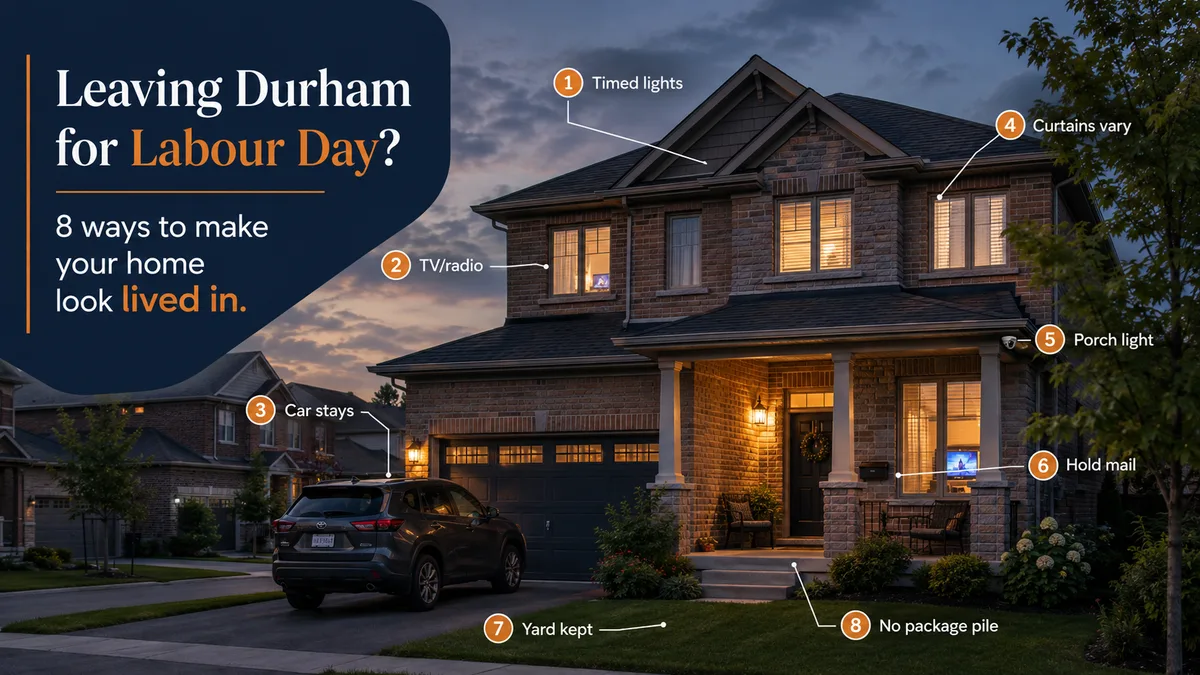
Durham Regional Police Service gives very similar advice in its current home-safety guidance: lock up, keep the place looking lived in, use lighting, ask someone you trust to check in, and make sure cameras cover key access points. Here is a practical pre-Labour Day version for Durham homes.
Key Takeaways
- Pause deliveries or have someone collect them before they pile up
- Use timers and exterior lighting to keep the house looking normal
- Lock vehicles and remove garage-door openers from cars parked outside
- Give a neighbour or family member a short, specific check-in list
- Let cameras cover the driveway, front door, and the route around the side of the house
1. Stop deliveries and mail from doing the talking
A full porch, an overstuffed mailbox, or a stack of recycling by the curb says more about an empty house than most people realize.
Before you go, pause deliveries where you can. If something is already on the way, ask a neighbour, friend, or family member to bring it inside. Do the same for mail and flyers if you will be away long enough for them to build up.
This is a small job, but it is one of the easiest ways to make the house look normal from the street.
2. Keep the house's normal rhythm
You do not need every light on all night. A couple of indoor lamps on timers are better. Set them for the time you would normally use them, then leave blinds and curtains in their usual positions.
Outside, make sure the front path, driveway, and side approach are not completely dark. Motion-activated lighting is useful around entries and pathways. It also makes a camera view easier to use without turning the place into a floodlit billboard.
The goal is simple: when someone passes by, the house should look like it belongs to people who are still coming and going.
3. Treat the garage and driveway as part of the house
The garage is not an afterthought. It often has direct access to the house, tools, bikes, and vehicles, and it is easy to overlook in the rush to leave.
Lock the garage, lock every vehicle, and remove garage-door openers from cars parked outside. Do not leave keys or valuables in plain view. If a neighbour can park in your driveway while you are gone, that can help keep the routine looking familiar too.
Your driveway camera should make this part easy to keep an eye on. It is there to show activity around the vehicle and garage, not to replace the locks.
4. Do one outside walk before you lock up
Take five minutes and walk around the house as if you were seeing it for the first time.
Check the side gate, shed, basement walkout, patio door, garage side door, and any window that is normally hidden by plants or furniture. Trim back anything that has grown into a path or blocks a light. Make sure gates latch and that nothing useful has been left outside by accident.
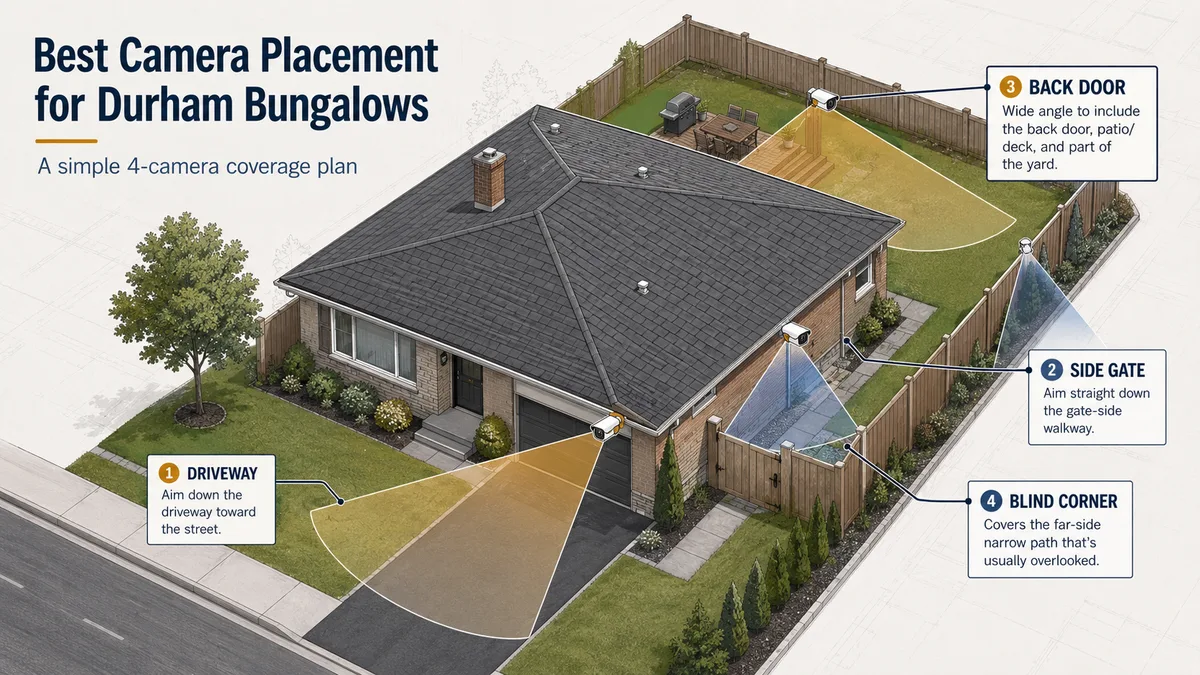
This is also the right moment to look at what your cameras can actually see. A hanging basket, a fast-growing branch, or a moved patio umbrella can quietly ruin an otherwise useful view. If you need a proper camera-placement refresher, our four-camera guide for Durham bungalows covers the basic routes that matter.
5. Keep the trip off social media for now
It is tempting to post the cottage view or airport photo while you are away. Wait until you are home.
Turn off location tagging, skip the automatic "out of office" message if it tells strangers when you return, and make sure older kids know not to announce that the house is empty. Share the photos after the trip. They will still be good then.
This is not about hiding from friends. It is about not making your absence easy to piece together for people you do not know.
6. Give someone a real check-in job
"Keep an eye on the place" is vague. A short list works better.
Ask one trusted person to stop by, bring in anything left at the door, move a bin if needed, and make sure there is no obvious issue around the house. Give them your travel contact, an emergency contact, and a key only if that is genuinely necessary. Do not hide a key outside.
If you use a camera app, they do not need to watch it all weekend. The human check-in is for the things a camera cannot do: a leaking hose, a fallen branch, a delivery left in the rain, or a light that has stopped working.
7. Let cameras do their part, without asking them to do everything
A camera system is useful when it covers the right routes: the driveway, the front door, and the side or back approach. It can show you whether a delivery arrived, whether someone is at the house, or whether a vehicle came through the drive.
It is not a lock. It does not replace good lighting, a secure door, or a neighbour who knows you are away.
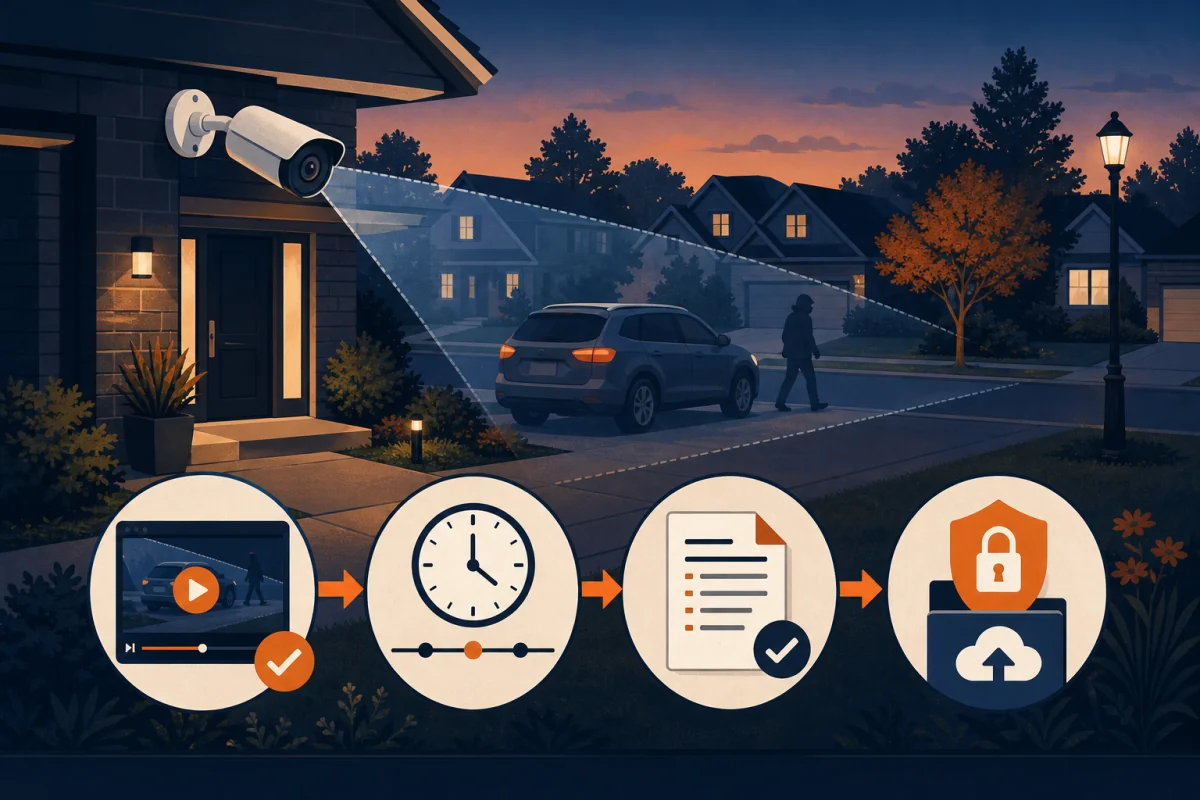
Before you leave, make sure you know how to open the app and find a recent recording. Do not turn the weekend into a system test. If you want a fuller run-through of saving footage and handling an incident, read what to do when your camera catches a crime in Durham.
8. Know what you will do if something looks wrong
If you see something concerning from away, do not try to manage it by yourself from a cottage or airport lounge. Call a trusted local person if it is appropriate. If a crime is in progress or someone may be in danger, call 911.
For an incident that is already over, save the relevant footage and follow the reporting route Durham Police recommends. Our incident guide explains the practical steps, including what to save and how the voluntary CAMSafe registry works.
The important part is having a simple plan before you need one.
The short version before you pull out of the driveway
- Pause deliveries and take out anything that signals you are away.
- Put a couple of lights on timers.
- Lock the house, garage, shed, and vehicles.
- Remove garage-door openers from cars parked outside.
- Check the side gate, backyard, basement walkout, and camera views.
- Keep trip updates off social media until you are home.
- Give one trusted person a clear check-in list.
- Make sure you can reach that person and open your camera app if you need to.
If that walk-around shows a blind spot, a dark side yard, or a system you do not trust, we can help. We install hardwired camera systems across Durham Region with local recording and no required monthly fees. We will walk the property with you, explain the options, and give you a written plan.
Book your free in-home assessment
Frequently asked questions
Should I leave lights on while I am away?
Use timers or smart plugs to create a normal evening pattern. You do not need every light on all night; the point is for the house to look normally lived in.
Should I pause deliveries before a trip?
Yes, if you can. Pause deliveries or ask someone you trust to collect them. Packages, mail, and recycling that sit untouched can advertise that no one is home.
Will security cameras keep my home safe while I am away?
Cameras are one useful layer, not a guarantee. They can help you see and document activity, but they do not replace locked doors, lighting, clear sightlines, or a trusted person checking in.
Should I register my cameras with CAMSafe before leaving?
It is optional. CAMSafe lets Durham Police know that a camera may be nearby during an investigation; it does not give police your password, live video, or automatic access to saved footage.
A good away-from-home plan is not complicated. It is a few small things that make the house look normal and make it easier to spot a real problem.